
Blog · Guides
DeepSearch vs Spokeo and People-Search Sites
27 August 2026 · 8 min read

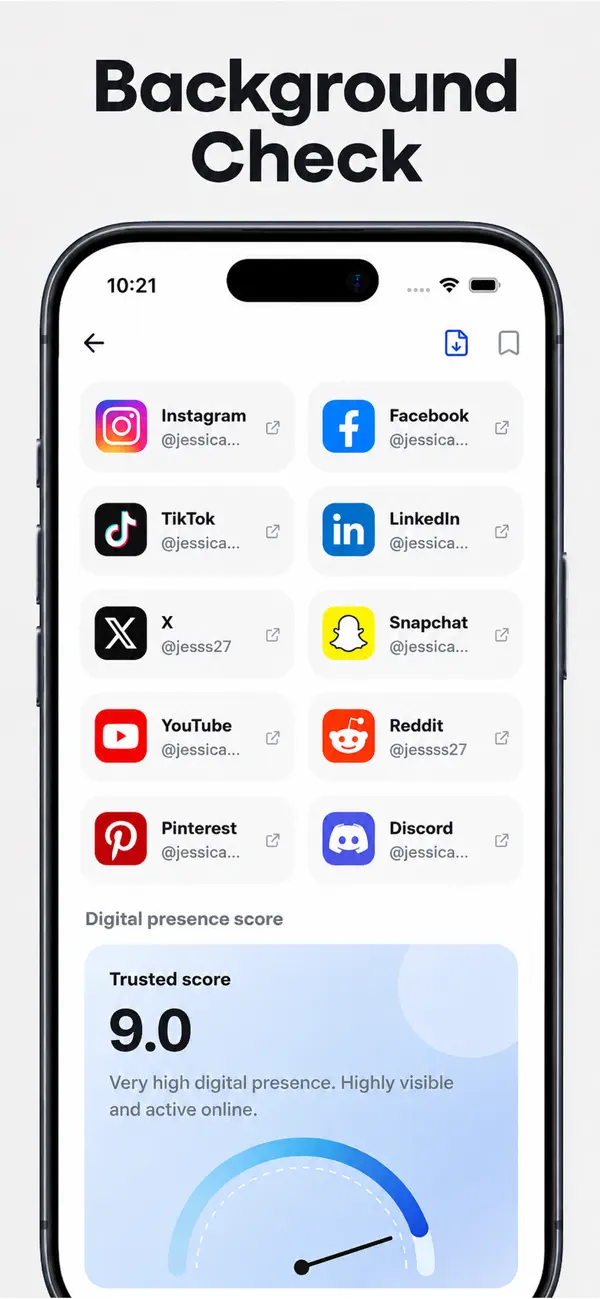
Spokeo, TruePeopleSearch, BeenVerified, and similar sites are mostly record brokers. They assemble consumer files: addresses, phone numbers, relatives, sometimes property. DeepSearch is an AI people finder that queries the live public web: public social tiles, photos, identification text, a confidence score (sample: 85%), and a digital presence score (sample: 9.0). Those are different machines. Neither one is an FCRA background check you can use for hiring, housing, credit, or insurance.
People mix them up because Google ads for both use the phrase “people search.” If you expect a household relatives list from DeepSearch, you will be disappointed. If you expect a current Instagram grid from a broker file that last refreshed months ago, you will also be disappointed. Pick the machine that matches the question.
Side by side
| Record brokers (Spokeo-style) | DeepSearch | |
|---|---|---|
| Main input | Name, phone, address | Name, username, organization, topic |
| Typical output | Directory-style consumer file | Sourced public profile, social grid, photos |
| Data style | Compiled records, often US-heavy | Pages anyone could open in a browser |
| Subject notified | Varies by product | No; lookups stay on your device workflow |
| FCRA screening | No, despite the marketing tone | No |
| Best for | Old address, possible phone | Current public identity when names collide |
What brokers still do better
If you need a last-known US street and a possible landline from compiled files, a directory site is built for that. DeepSearch will not pretend to be a nationwide white pages. Public GitHub and a conference talk will show up here; a 2014 utility listing might show up there.
Brokers also train people to expect a “report.” That report is still not a compliant screening product. The FTC has fined companies for implying otherwise. For the legal split, read people search vs background check. This page does not claim DeepSearch is a better background check. It is not a background check.
DeepSearch will not return a Social Security number, a credit file, or a court docket packaged as an eligibility report. If a news article about a lawsuit is public, that page can appear like any other public page. That is still journalism on the open web, not a consumer report you can use to hire or house someone.
Use DeepSearch when you need a public-web brief with sources you can open. Keep a licensed CRA if you are making an eligibility decision.


What DeepSearch is for
Pick the right person among twenty John Smiths. Collect public Instagram, LinkedIn, and GitHub-adjacent pages. Read an identification paragraph and key details, then click the sources. The social grid can show Instagram, Facebook, TikTok, LinkedIn, X, Snapchat, YouTube, Reddit, Pinterest, and Discord when public pages exist. Handles may truncate as @jessica.... Compare with LinkedIn-the-network in DeepSearch vs LinkedIn and with a raw Google tab in vs Google Search.
Subscription plans on DeepSearch unlock full or unlimited access depending on the plan, billed through the App Store or Google Play. Record brokers have their own paywalls. Paying does not turn either product into a consumer reporting agency. Search yourself if you want to see the public footprint both kinds of product can touch: check your digital footprint.
Questions
Is DeepSearch a better Spokeo?
No. Spokeo-style sites compile consumer records. DeepSearch queries public web pages and social signals. They solve different jobs. Neither is an FCRA screening product.
Which one should I use to reconnect with someone?
Record brokers are built for US address and phone directories. DeepSearch is built for public profiles, photos, and a confidence score when names collide. Many people end up using a directory for an old address and DeepSearch for the current public web.
More guides